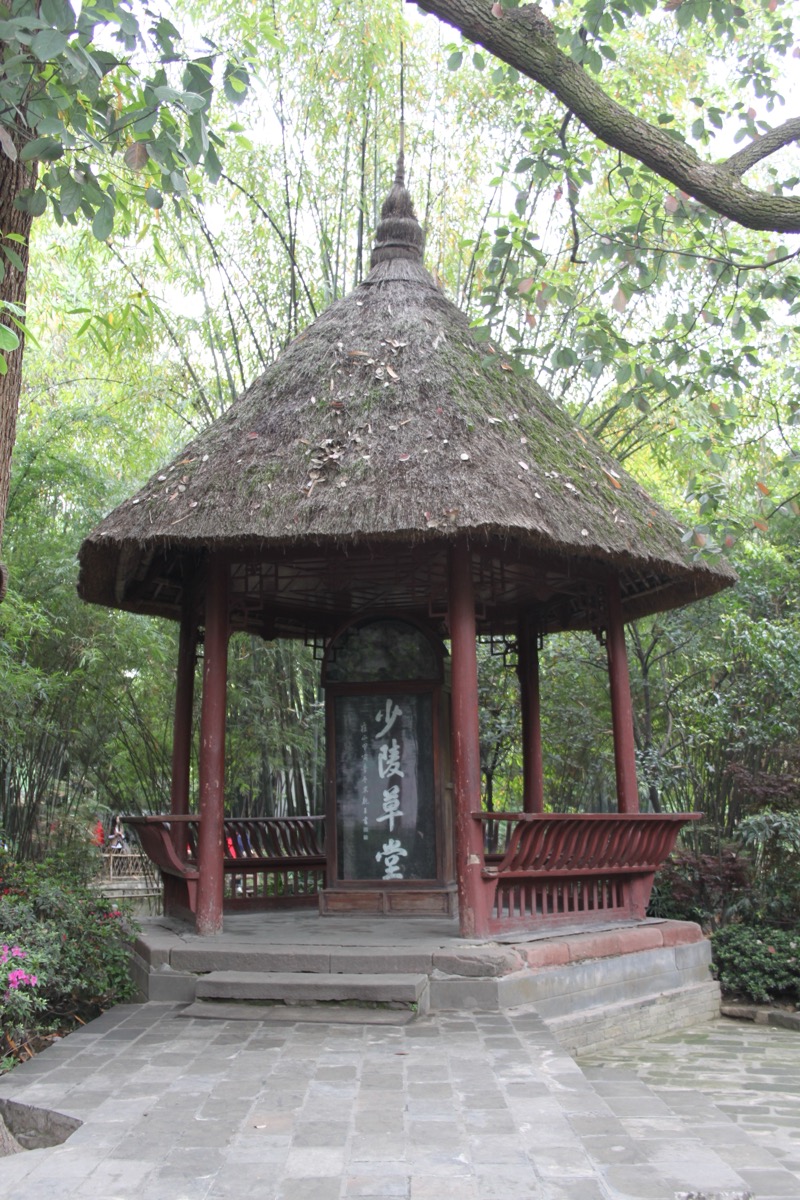
Read for the scale of everyday life
Choose one poem written during Du Fu’s Chengdu years and read it before visiting the museum. Weather and shelter can matter as much as a broad account of Tang history. Look for a detail you can carry into the grounds, such as a description of rain or the relationship between shelter and the land around it.
Put the reconstructed cottage in context
The residence seen today is part of a museum interpretation. Use the displays to place the poet before looking at the rooms or paths as evidence of his life. Spending time in the garden and by the water is useful because it gives you a sense of a place for withdrawal and writing within the larger city.
Pick a reading that can accompany a garden walk
Spring Night Rain is a short starting point if you want to notice weather rather than follow a full chronology. Read it, look for a change in the time or sound of the scene, then take that observation into the grounds. The purpose is to connect a poem with parts of an ordinary landscape you can actually see and hear.