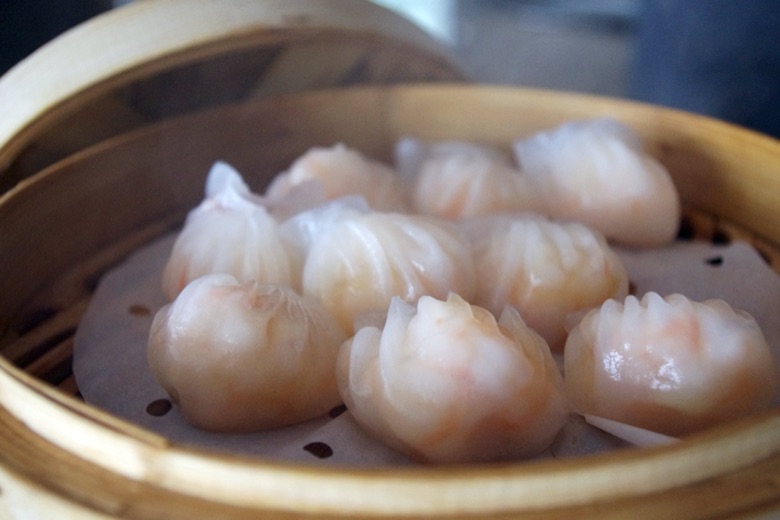
How to judge the wrapper and filling
Har gow is small enough to look simple, yet the wrapper has two jobs. It needs to stay supple and thin enough to let you see the shrimp, and it needs to hold together when it is lifted. Look at the dumpling from the side, where the pleats gather. Taste part of the wrapper with the shrimp so you can feel the difference between the soft skin and the firmer filling.
Make it one part of a morning tea order
You may see the names 蝦餃 and 虾饺 on menus. If several shrimp dishes are listed, use that name to identify the steamed dumplings. Order them with a rice roll or something baked for a contrast in texture, and let the basket cool briefly before trying to move a dumpling to your plate.
Look at how it contrasts with other dumplings
Use a steamed shrimp dumpling as a reference point when ordering from a longer dim sum menu. A broader rice sheet in a roll will feel softer, while a baked item or bun brings a different kind of dough. Choosing two contrasting dishes gives you something to notice between baskets. It also makes it easier to judge whether to order another round.
Continue exploring
Sources and visitor information
Guangzhou municipal guide · Cantonese cuisine and morning tea