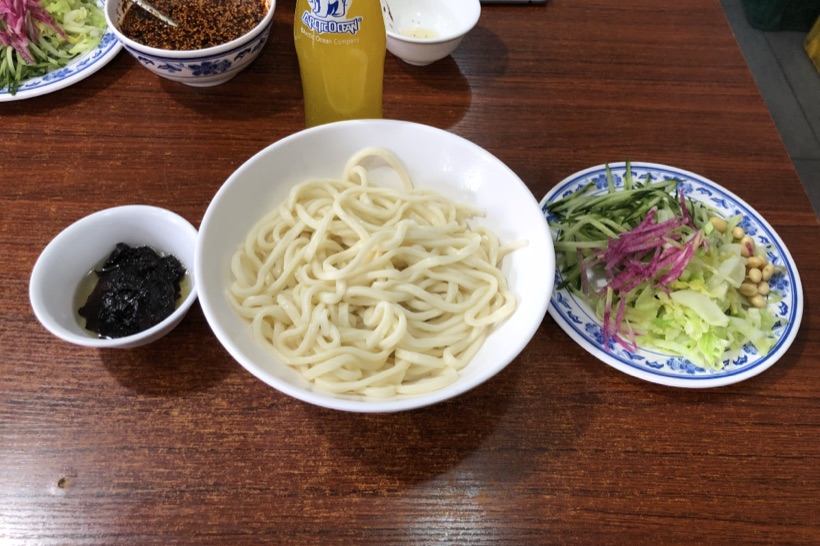
Read the bowl before mixing it
Zhajiang is the fried paste that seasons the noodles. The vegetables provide freshness and texture, while the concentrated paste does much of the seasoning. Mix a small part of the bowl at first. If you pour in every spoonful as soon as it arrives, you lose the chance to find the balance you like. Stir low enough to bring the noodles at the bottom up into the sauce.
Compare it with a soup noodle meal
This dish is a good choice when you want to taste the noodles themselves. The sauce clings to them, so a longer chew matters more than it might in a bowl with broth. Vegetable toppings alone do not tell you whether the sauce is vegetarian. Ask about minced meat and the preparation of the paste if you need to avoid it.
A Beijing order to recognize
Look for 炸酱面 on the menu. If the noodle section only gives a broad English translation such as “noodles with bean sauce,” the Chinese name helps identify the dish. Check how the sauce is presented, because a neatly divided bowl lets you adjust proportions while a bowl mixed in the kitchen invites you to judge how balanced it is as served.