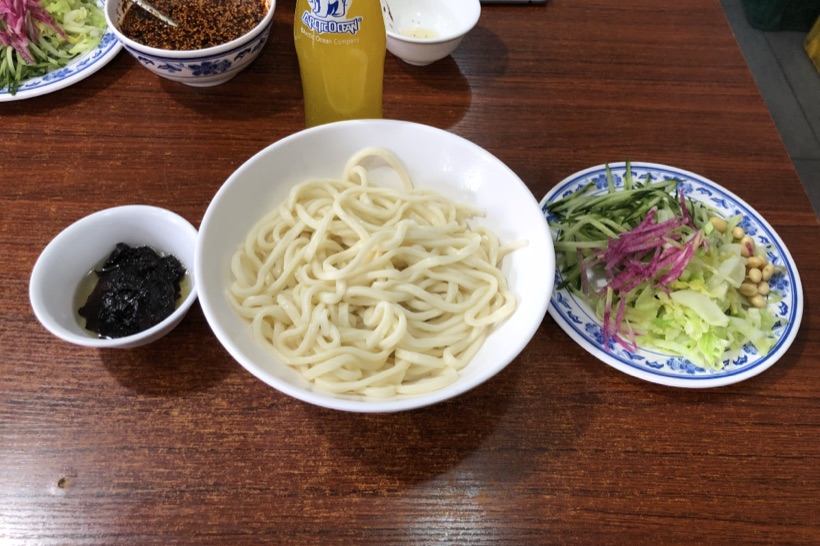
Zhajiangmian 炸酱面
Mix wheat noodles with a thick fried soybean-paste sauce and strips of fresh vegetables. The sauce is often served separately so you can mix in as much as you like.
Palace rooftops, hutong lanes, and everyday meals in China’s capital.
Overview · North China
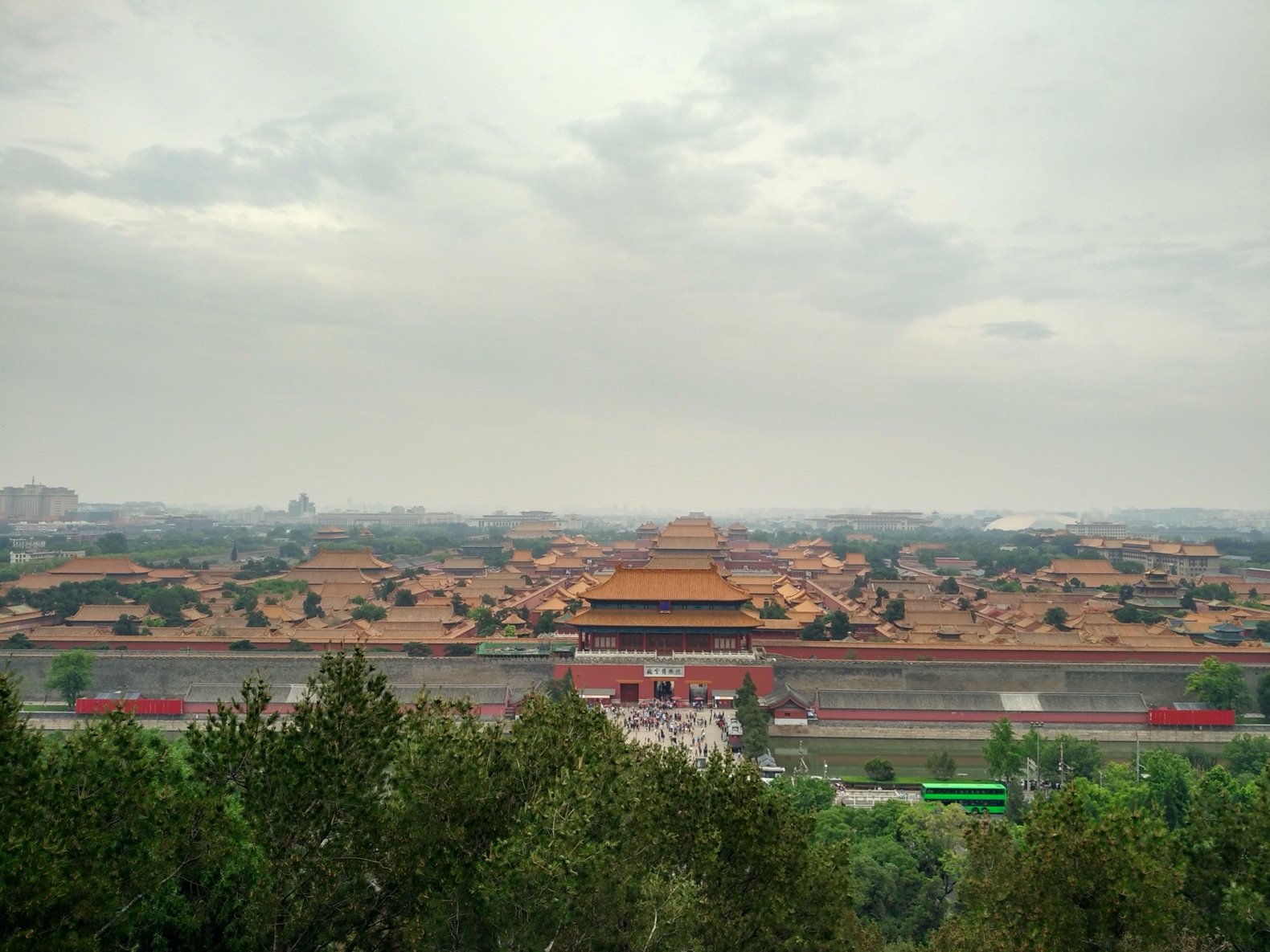
Beijing is China’s capital, at the northern edge of the North China Plain. Its historic Central Axis runs through palace gates, ceremonial buildings, and the Drum and Bell Towers. Jingshan Hill gives you a view of how the old center fits together.
At street level, the rhythm changes. Narrow lanes called hutongs connect courtyard homes and small shops. Around Shichahai, those lanes open onto the water.
Food
Start with a meal shared at the table, then try a bowl you can mix yourself.
Mix wheat noodles with a thick fried soybean-paste sauce and strips of fresh vegetables. The sauce is often served separately so you can mix in as much as you like.
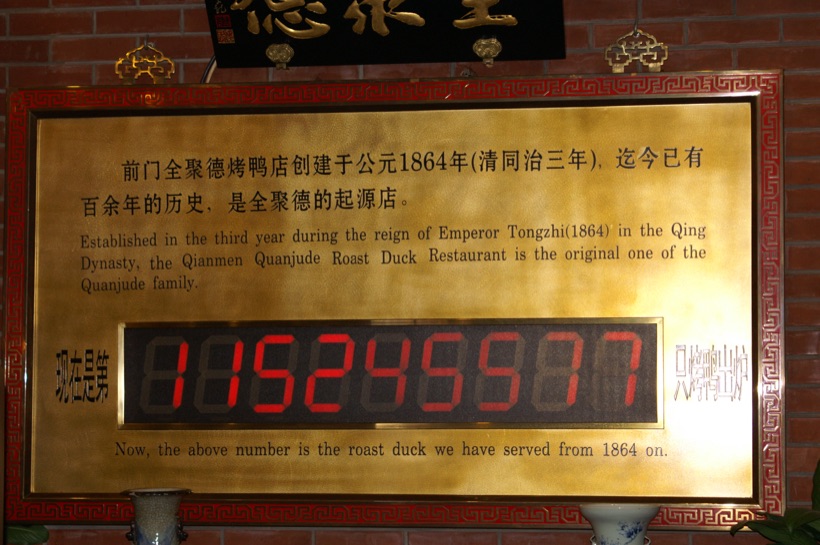
Thin slices of roast duck, often with crisp skin, are wrapped in pancakes with scallion and a savory-sweet sauce.
Scenery
Two places to get your bearings in the old city.
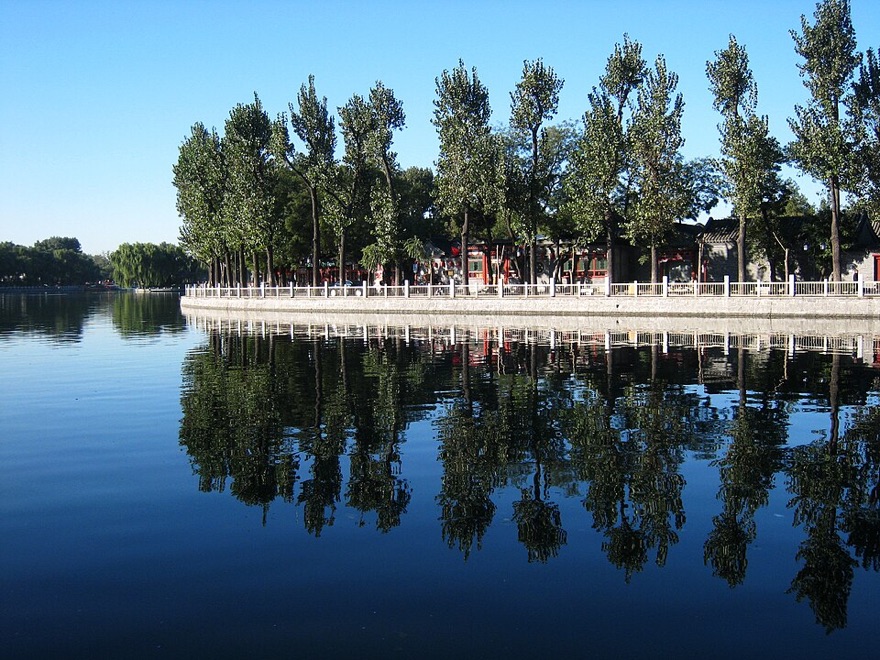
Follow the lakeside paths around Qianhai and Houhai, then turn into one of the lanes that branch away from the shore.
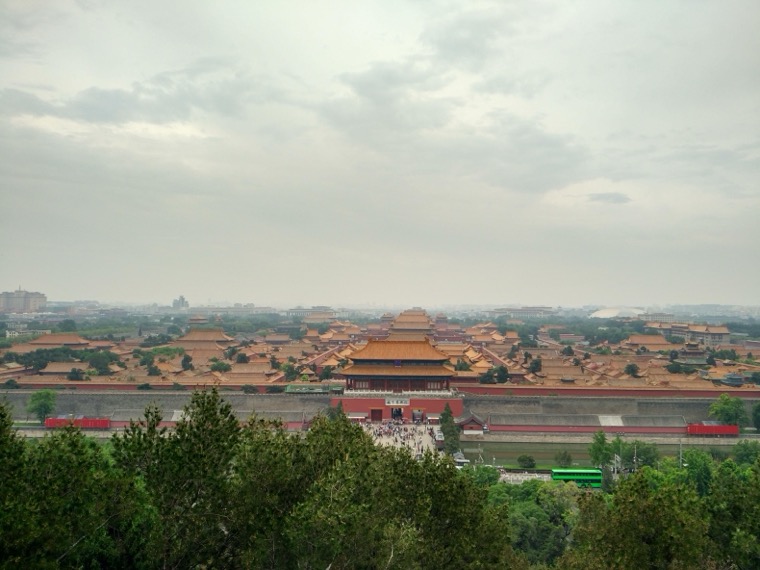
Climb the hill just north of the Forbidden City for a view of tiled roofs arranged along Beijing’s historic north–south axis.
Architecture
A round imperial hall and the square layout of an everyday home tell different stories about how the city was built.
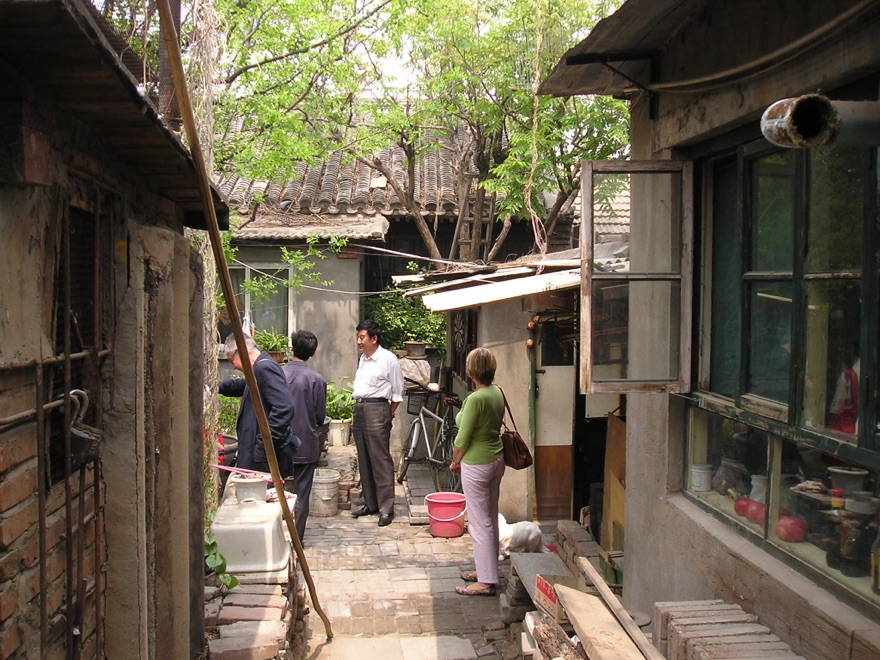
The rooms of a traditional siheyuan face an enclosed courtyard. In the hutongs, the street gate offers a hint of the layout inside.
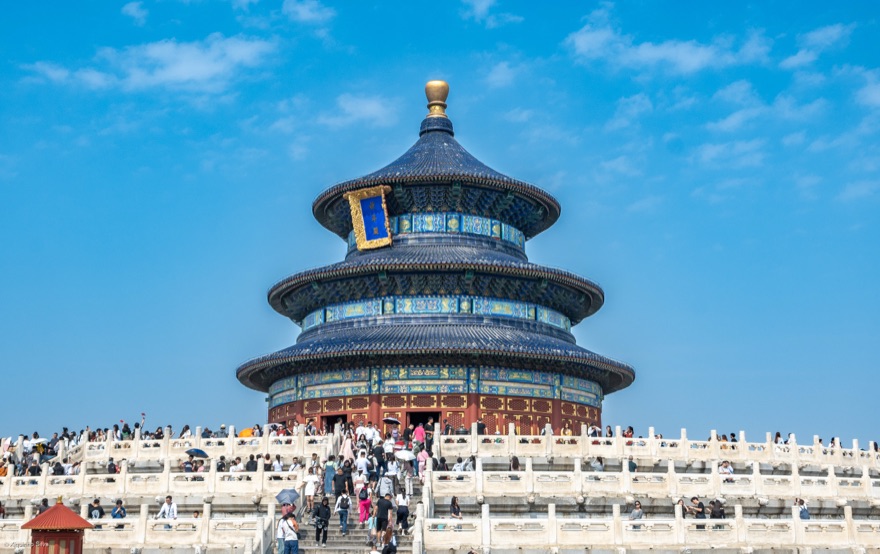
Look for the circular, blue-tiled Hall of Prayer for Good Harvests. It belongs to a complex where Ming and Qing emperors made offerings.
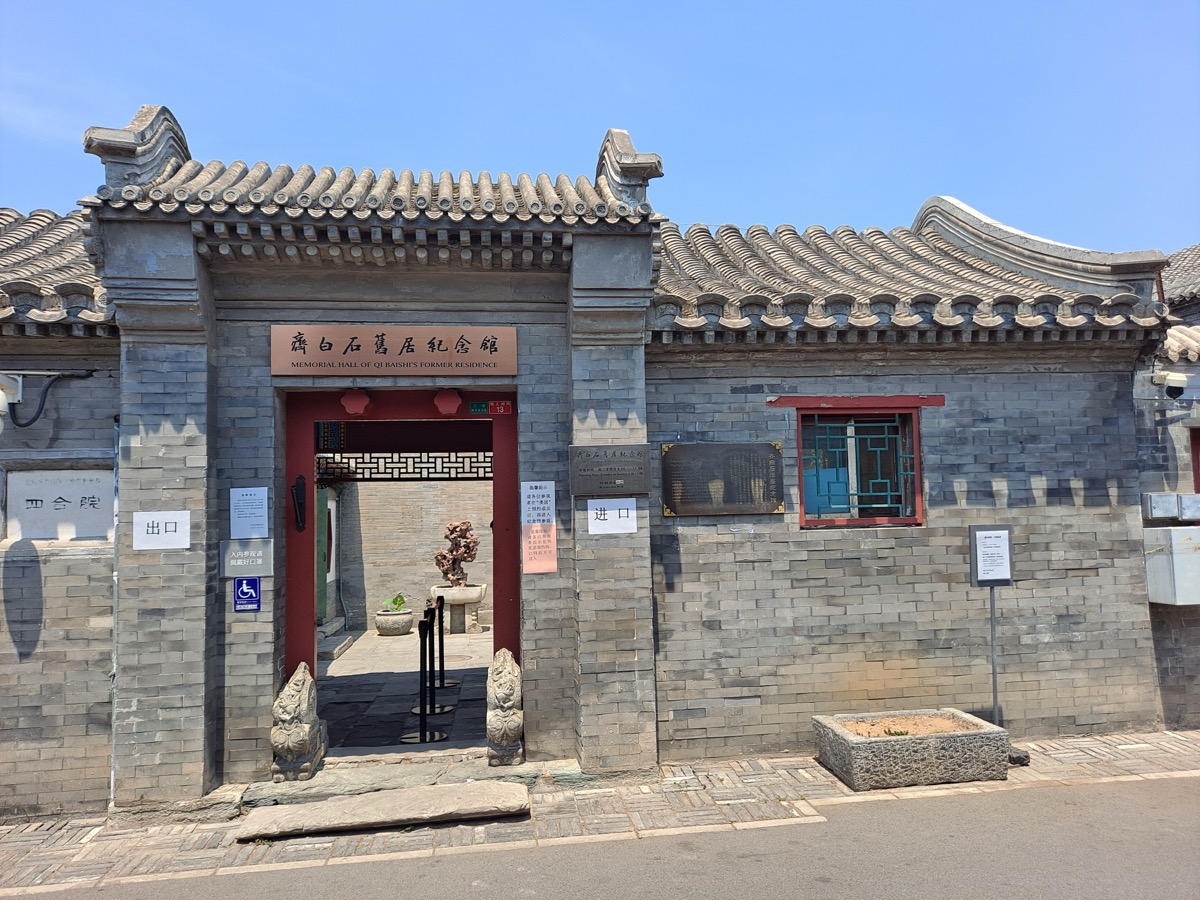
The painter settled in Beijing and is known for ink paintings of everyday subjects, including shrimp. His former home off Nanluoguxiang connects that work to a residential lane.
The novelist made Beijing’s streets and working lives central to Rickshaw Boy. His former home in Dongcheng preserves the study and courtyard where he spent his later years.
Hotels
Choose Dongcheng for the historic center and Wangfujing, or Jiuxianqiao for the galleries and design spaces of eastern Chaoyang.
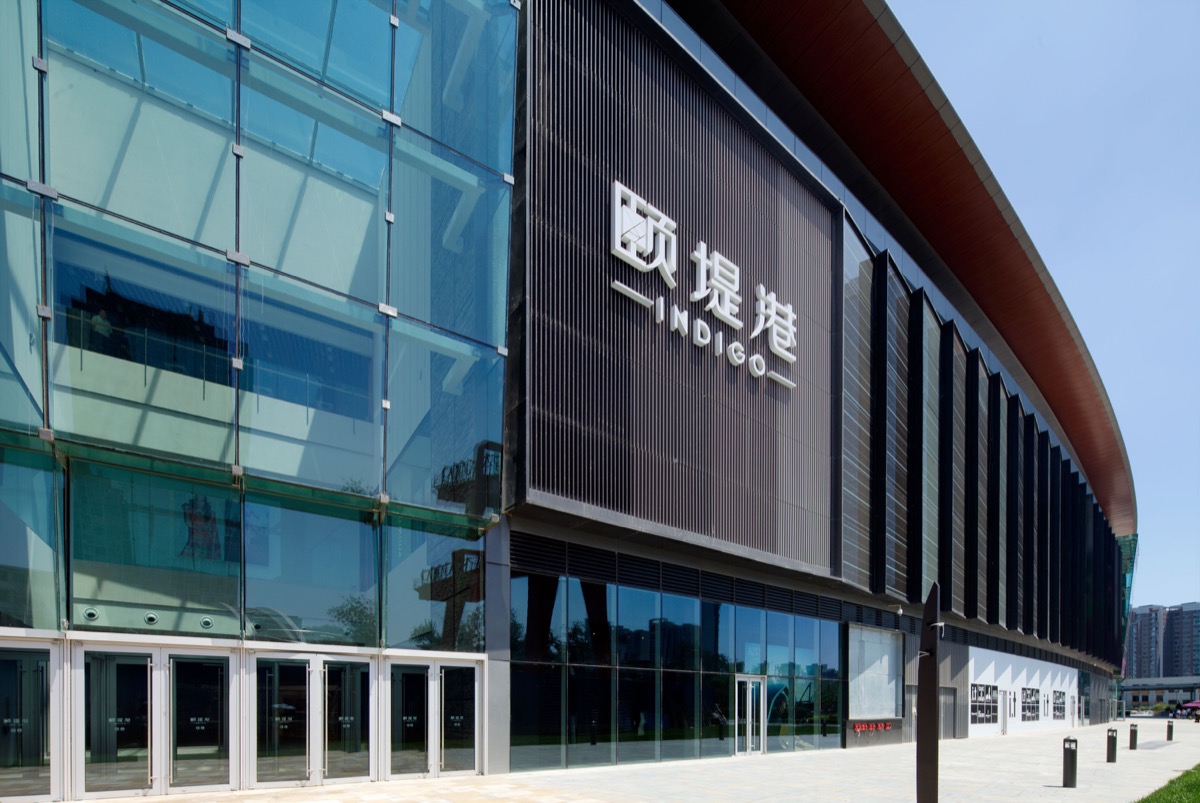
A hotel in the INDIGO development in eastern Beijing, a useful base for exploring Jiuxianqiao.
A central hotel near Dengshikou and Wangfujing, within reach of the old city’s lanes and palace district.
Photos are resized for the web and cropped to fit some layouts.


