Look for the changing edge
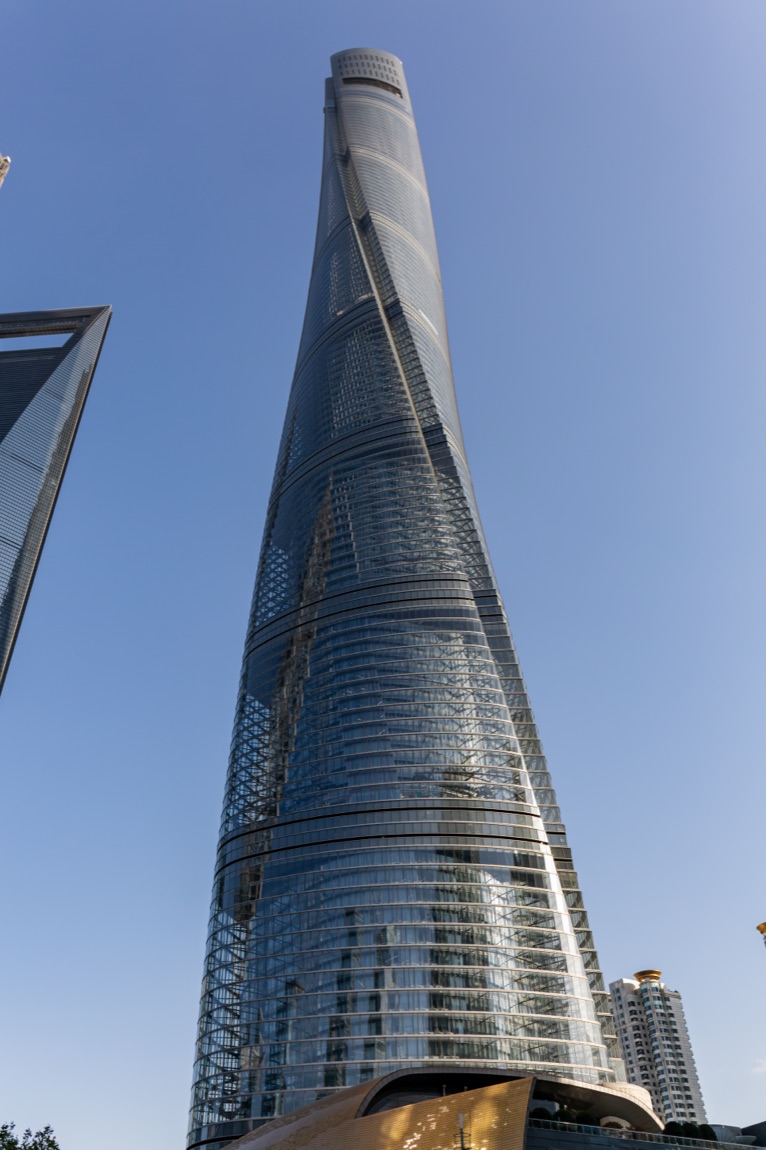
Start in Lujiazui where you can see the glass against the sky. Follow one outside edge upward, then move to another public vantage point and repeat the exercise. The turn of the tapered form is easiest to see against the straighter neighboring towers, and the full silhouette is easier to read from across the river.
See how the engineering changes the view
The rotating form was part of the design response to wind. Wind-tunnel testing helped the architects refine the shape. The outer glass also wraps around an inner structure, so the surface you see from the street is not simply the outside wall of each room. Look for the difference between the exterior curve and the more regular levels inside it.
Compare close and distant views
The low part of a tower can dominate a close view, which makes it hard to read changes over the full height. Look at it once from the Bund and once from a public location in Lujiazui. From the far bank you can follow the overall twist. From closer in, you can compare the curved surface with the more regular floors visible behind the glass.