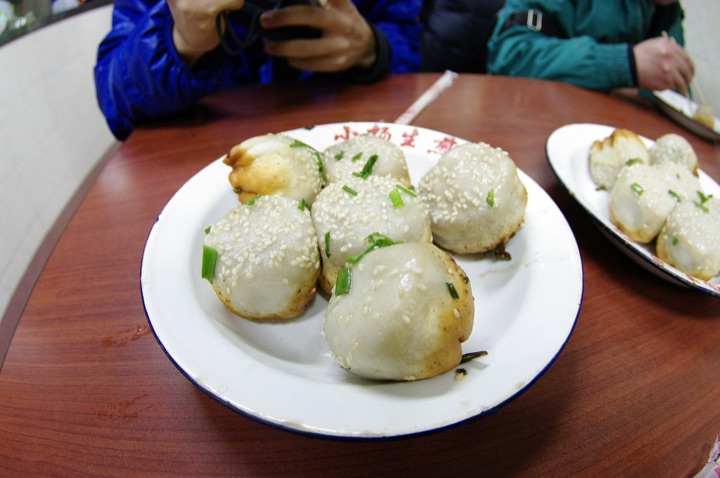
How the pan shapes the bun
The difference shows up before you take a bite. Look for a browned circle where the dough touches the pan and a pale side where it stays soft. Frying and steaming in the pan give one bun two textures. When the filling is juicy, open it over a spoon after it cools a little, then take a second bite that includes the crisp base.
How to compare it with xiaolongbao
Try them at separate stops if that means getting both fresh. In a steamed xiaolongbao, the broth and thin wrapper are the focus. In a shengjianbao, pay attention to the thicker dough and the contrast across the bun. If you are choosing just one dish for breakfast, a small order of pan-fried buns makes it easy to see whether you want anything else.
Look for 生煎 when ordering
A shop window or menu may shorten the name to 生煎. Look at the cooking surface or the bottom of the served bun if you want to understand the dish before ordering more. Two small buns can be more useful to a tasting walk than a large plate that will cool before you finish. Let the filling settle briefly before biting into it.