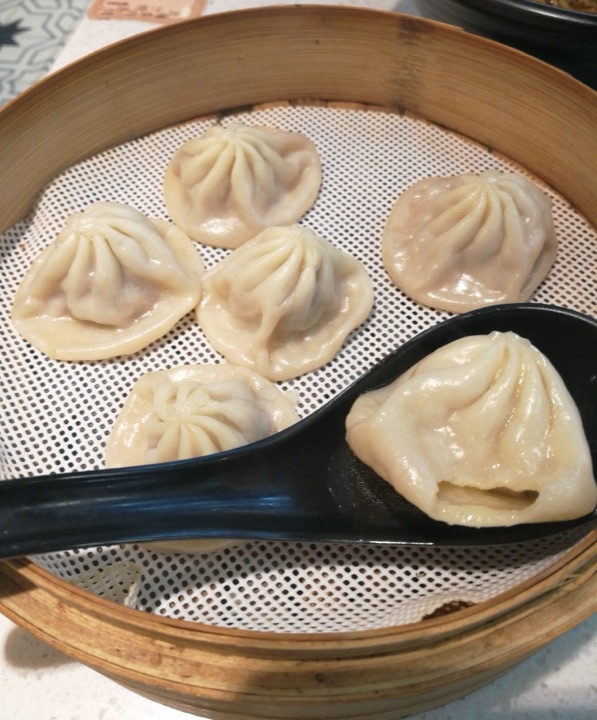
Where the soup comes from
The broth can be handled as a solid while the dumplings are being made. Stock chilled to a gel can be folded into the filling, then melts as the buns steam. That is why you can taste a spoonful of liquid even though the wrapper looks dry from the outside. Start with the broth, then taste the wrapper and filling together to see how much work that thin skin is doing.
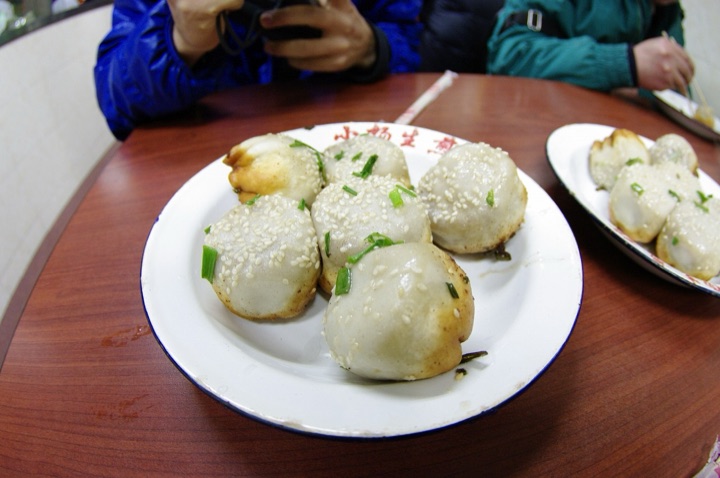

What to order alongside a basket
Read the filling description as well as the name. A pork basket and one marked with crab may taste quite different, and a crab version can still contain pork. If you are sharing, start with one basket while it is hot. A plate of shengjianbao or a bowl of scallion oil noodles makes a better comparison than ordering several versions of the same dumpling at once.
Look for the name and read the filling
The menu name 小笼包 identifies the small steamed buns. It does not identify the filling by itself. If the basket lists a specialty ingredient, check whether it is mixed with pork or used on its own, especially when sharing with diners who avoid an ingredient. Start with a familiar filling and use the Shanghai food guide to find a contrasting dish for the next stop.